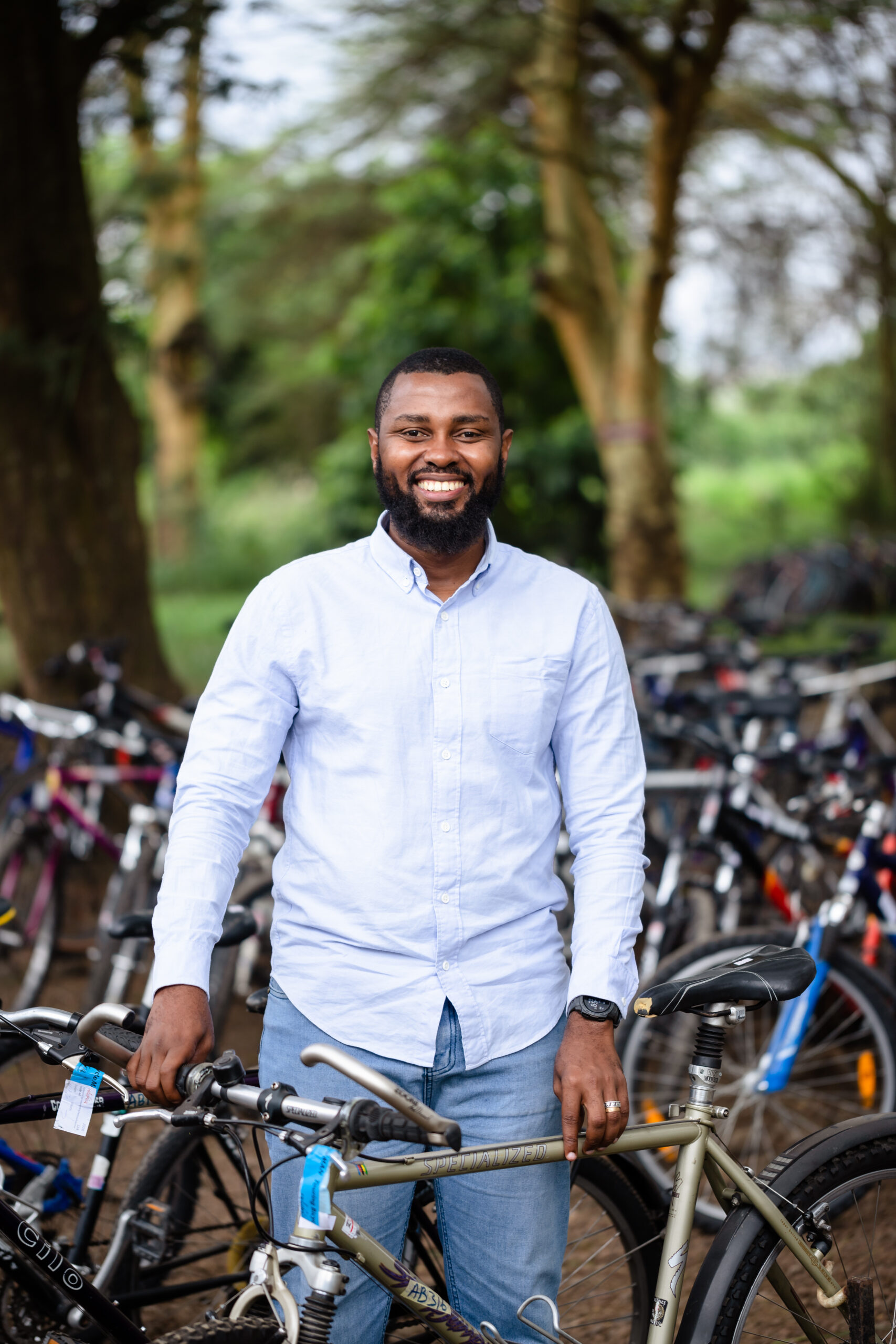
Hans Harrison Lyombe has been leading Velafrica’s partner organisation ABC in Tanzania since its foundation in 2015. He is convinced that bicycles hold the key to a good life – and he has observed how cycling has become more and more popular in and around Arusha. An interview.
Hans, you have a background in finance, how did you end up as CEO of a bicycle company?
I began my career as an accountant at a tanzanite mining company. Tanzanite is a rare gemstone found only in Tanzania. When the company was sold, I was eager to try something new, so I started selling second-hand mobile phones and accessories. One day, I sold a phone accessory to a board member of ABC, which was then being established with support from Velafrica. During our conversation, we discussed my educational background, and he introduced me to Nikolai, Velafrica’s co-director. I was excited to enter the bicycle business. It was an entirely new field for me, and Arusha’s bicycle market consisted mainly of small-scale sellers before ABC began operating. Some friends and relatives questioned my decision because they did not believe I could make a living selling second-hand bicycles. Nevertheless, I saw an opportunity and decided to pursue it.
So ABC is the first formal bike shop in Arusha. Can you tell us more about how people have used bicycles before and how that has changed with ABC?
For a long time, bicycles were associated with poverty, and cycling was seen as a necessity for those who lacked other transport options. Although this perception persists, we have played an important role in changing attitudes in Arusha and beyond, including by participating in and supporting popular cycling events. ABC has grown from a small office receiving 500 bicycles annually from Velafrica to four branches receiving more than 6,000 bicycles per year. We have also seen more small bicycle retailers enter the market as they recognise the growing demand. To distinguish ourselves, we focus on high-quality service and offer spare parts and accessories from Swiss brands.
How do people learn about ABC and its services?
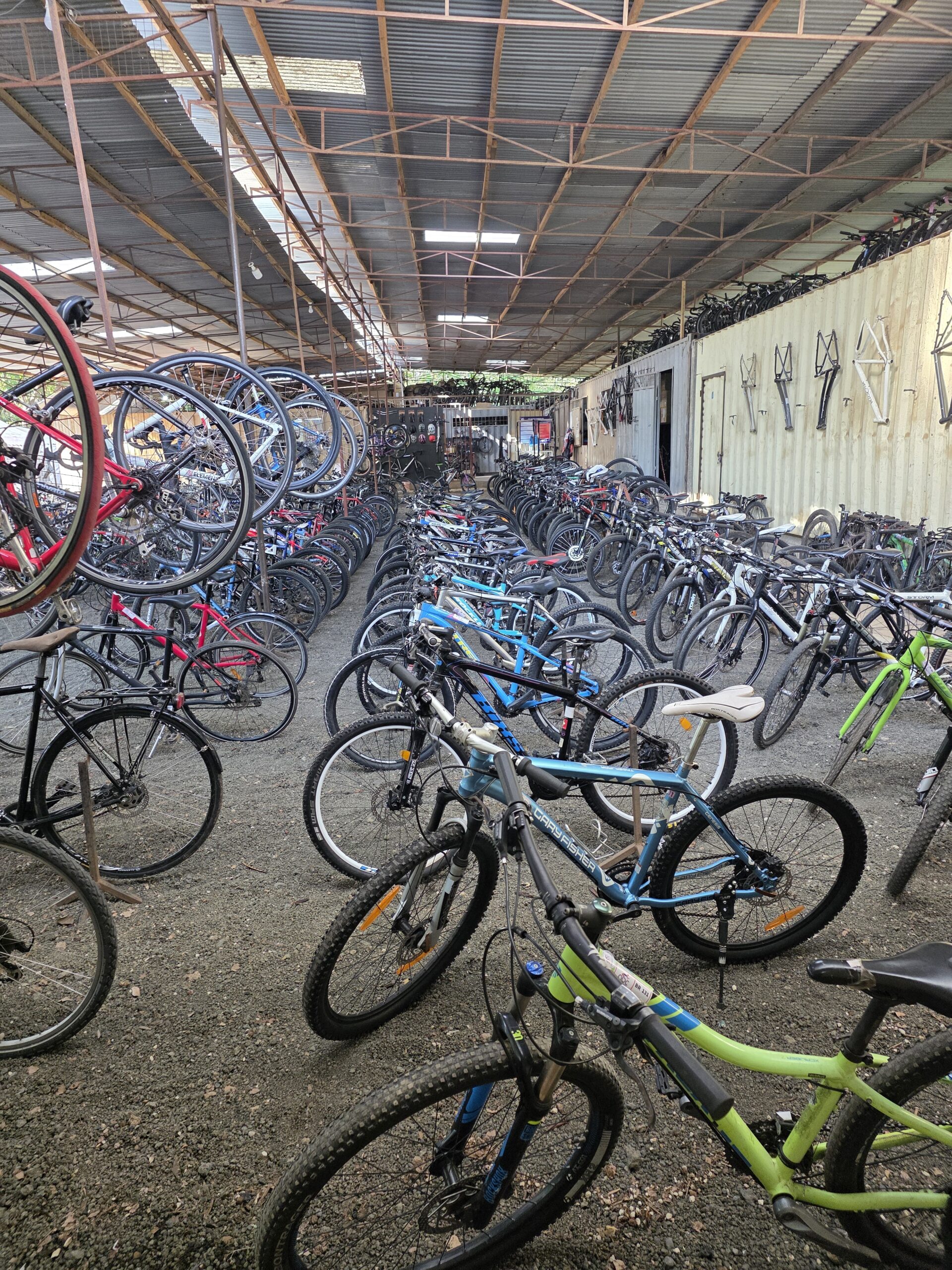
In the past, we advertised our services on the radio, but today we focus mainly on social media. We also participate in cycling events and distribute branded merchandise, including ABC T-shirts and wrist bands. Our shops showcase a wide selection of bicycles, allowing customers to explore our range. Word of mouth remains an important source of referrals, including among international travellers who rely on our repair services while cycling through Africa.
Can you explain the difference between ABC and ABC Impact?
ABC was established as a social enterprise, with all profits directed towards community projects. After several years, we separated the commercial operations from the social programmes to comply with national requirements.
Today, ABC Impact manages projects such as “Bike to School” and “Bikepreneur” in partnership with Velafrica, alongside other initiatives, including the “Youth Bike Academy.” Meanwhile, ABC Bicycle Company Ltd purchases second-hand bicycles from Velafrica and sells them through its four shops, meeting local demand for affordable and sustainable transport.
You also train bicycle mechanics. Has this been a goal from the start or did it emerge over time?
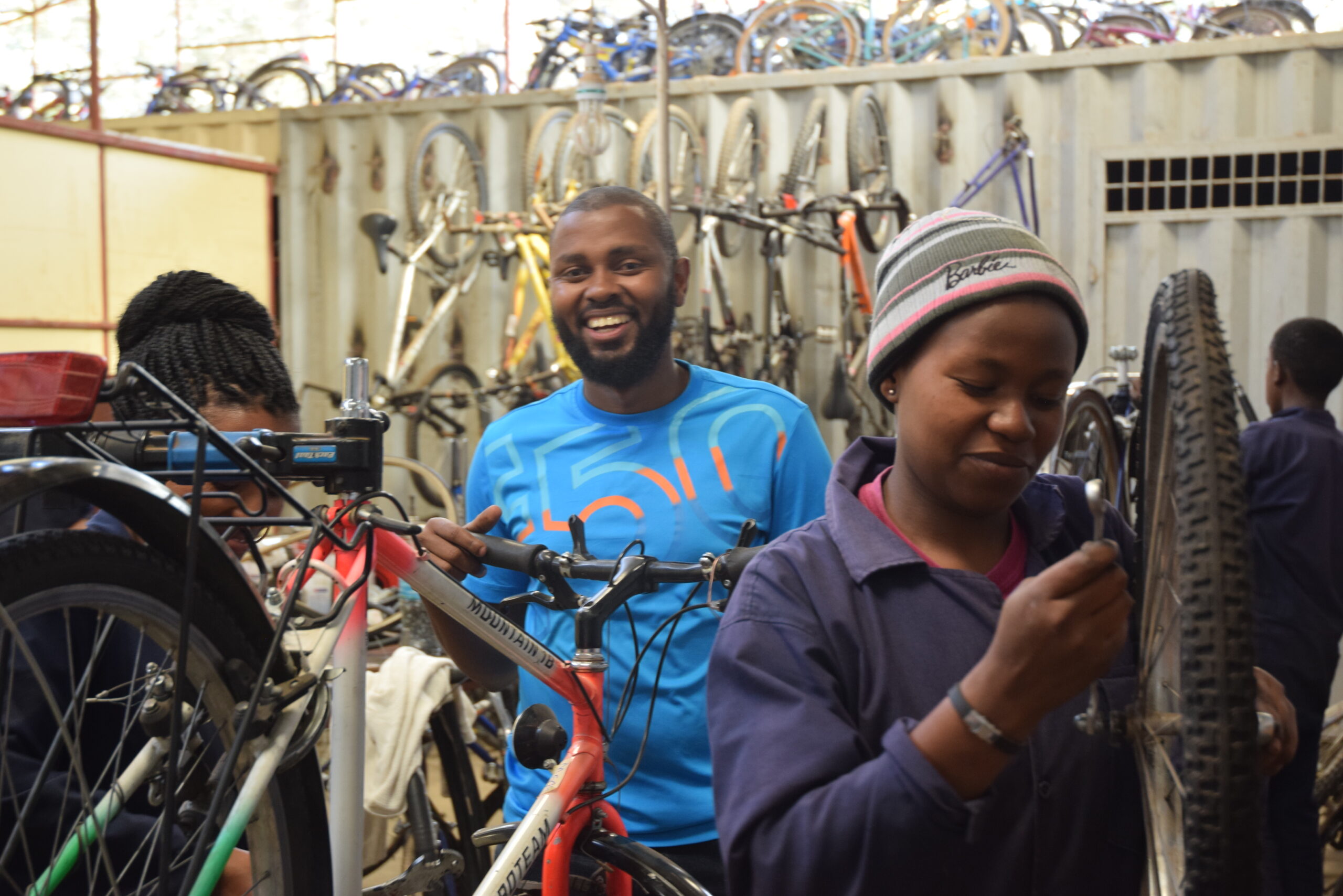
We have seen the need to have our own bicycle mechanics program since the very start, because we knew that if we provided bicycles, at some point these bicycles would need to be serviced. And the more so the more bikes we bring in. There have been some mechanics in the area, but they weren’t professionally trained. Nevertheless, it was challenging to set up a program that would not only allow the trainees to join ABC but also become independent to further grow the bicycle business. Last year, we finally trained 16 candidates and another 16 this year.
What do you think is needed so that by 2030, many more people ride a bike from ABC?
I think the most important thing is to engage the community more, for example through weekend group rides. This way, we know they have us in mind for buying a bike but also to repair it. But more broadly, I hope that bikes will be seen more and more as a key to a good life, similar to Europe. In times where non-communicable diseases are on the rise in Africa, a bike is an answer to everything: You keep yourself fit, you leave everything aside and only focus on the road, you preserve nature, you can make meaningful connections with other people, you can save money with a bike, but also earn a living. A bike has so much potential!
Interview by Bettina Wyler (Velafrica)
Support cycling in Arusha!
With a donation of 75 CHF, you can help, for example, to refurbish and export another bicycle to Tanzania. Thank you very much!